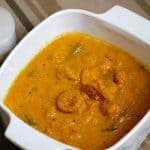
Kerala Prawn Curry
A delicious mouthwatering curry made with shrimp and drumstick in coconut gravy and is based on Malabar and Kerala cuisine
Servings: 8 people
Calories: 41kcal
Ingredients
- 10 -15 Prawn (Shrimp) medium sized
- 1 cup coconut Frozen grated or fresh
- 1-inch ginger coarsely cut
- 2 -3 Tomatoes finely chopped (medium-sized)
- 3 green chilies slit
- 8-10 shallots halved
- 1 small Tamarind lemon-sized ball (juice squeezed) optional
- ½ tsp Turmeric powder
- 2 tsp Red Chili powder or as tolerated
- 1 sprig curry leaves
For Tempering
- 1 tsp mustard seeds
- 3-4 shallots finely chopped
- 2 sprig curry leaves
- 1 tsp red chilli powder
- ¼ tsp turmeric powder
Instructions
- Grind the coconut with one shallot , spices and little water to a very fine paste.
- Take a deep-bottomed pan and boil the ginger, green chilies, shallots, and tomatoes with a little water. Add a little tamarind extract if you like.
- Add salt and spices turmeric and chilly powder to it.
- Add the shrimp and cook till it is done.
- Add curry leaves and boil for 2 more mins.
- Add the coconut paste and boil for about 5 to 10 mins till a nice yellow color is obtained.
- Turn off heat.
- Heat 2 spoons of oil in a small pan and add mustard seeds.
- After the mustard seeds splutter, add finely cut shallots, curry leaves, and fry until reddish-brown.
- Add this to the curry. Serve with rice. Enjoy!
Video
Notes
- Drumsticks may not be available year-round, especially in the U.S., but frozen ones are readily available in any Indian grocery store.
- Adding vegetables to the prawn curry not only provides texture but also ensures that they absorb the flavor of the shrimp, thus the dish as a whole turns even more delicious and satisfying.
- Prawn and Shrimp give unique flavors to any curry, just as in making Goan Shrimp Curry, and Prawn Mulakittathu.
- Vegetarians can omit the prawn or shrimp and make the same curry with only the drumstick or just tomatoes, which tastes equally great! You can also use green mangoes (manga) or snake gourd instead of drumsticks.
- For the best taste, fresh coconut is always the preference in this recipe. It gives that original flavor. That being said, frozen grated coconut does a good job as well, and it's far more readily available. Simply grind it into a smooth paste using just enough water.
- If you can get your hands on fresh prawns, they’re definitely the best choice. However, if fresh isn't an option, good-quality frozen prawns are a great substitute and still make a delicious curry.
- This curry gets its gentle tang from ripe and sour tomatoes, which add just the right amount of acidity to balance the richness of the coconut and prawns. If you prefer a slightly more tangy kick, feel free to add a little tamarind juice
- Using green mango instead of drumsticks? That’s a delicious variation! Just remember to adjust the tomatoes and skip or reduce the tamarind, since mango already brings a good amount of natural sourness. The key is balance, and you want the tang to lift the dish, not overpower it.
Nutrition
Serving: 65g | Calories: 41kcal | Carbohydrates: 9g | Protein: 2g | Fat: 0.3g | Saturated Fat: 0.1g | Polyunsaturated Fat: 0.1g | Monounsaturated Fat: 0.1g | Cholesterol: 2mg | Sodium: 72mg | Potassium: 212mg | Fiber: 2g | Sugar: 4g | Vitamin A: 415IU | Vitamin C: 14mg | Calcium: 21mg | Iron: 1mg
